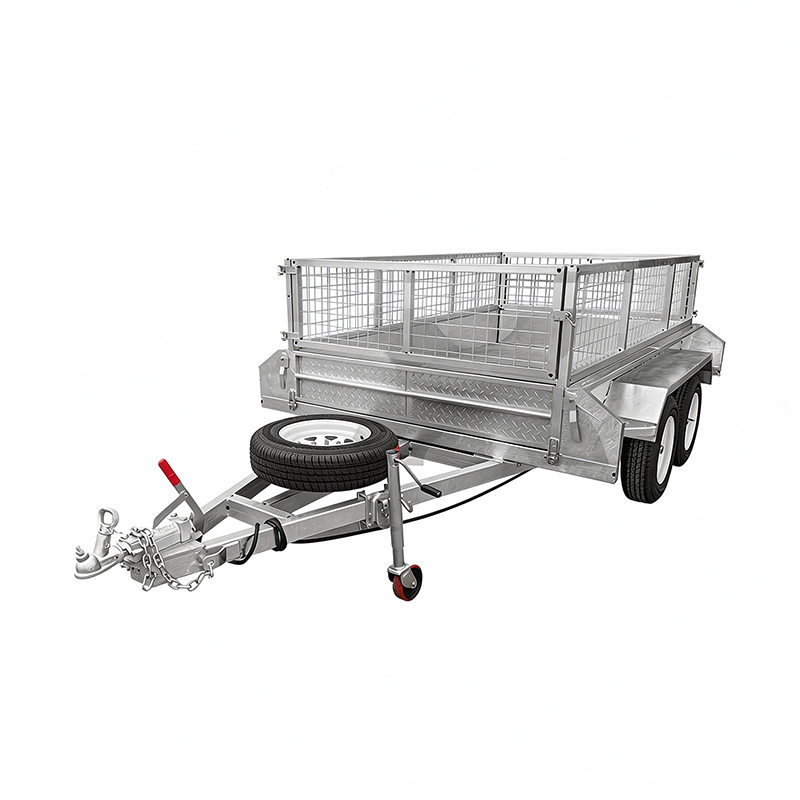
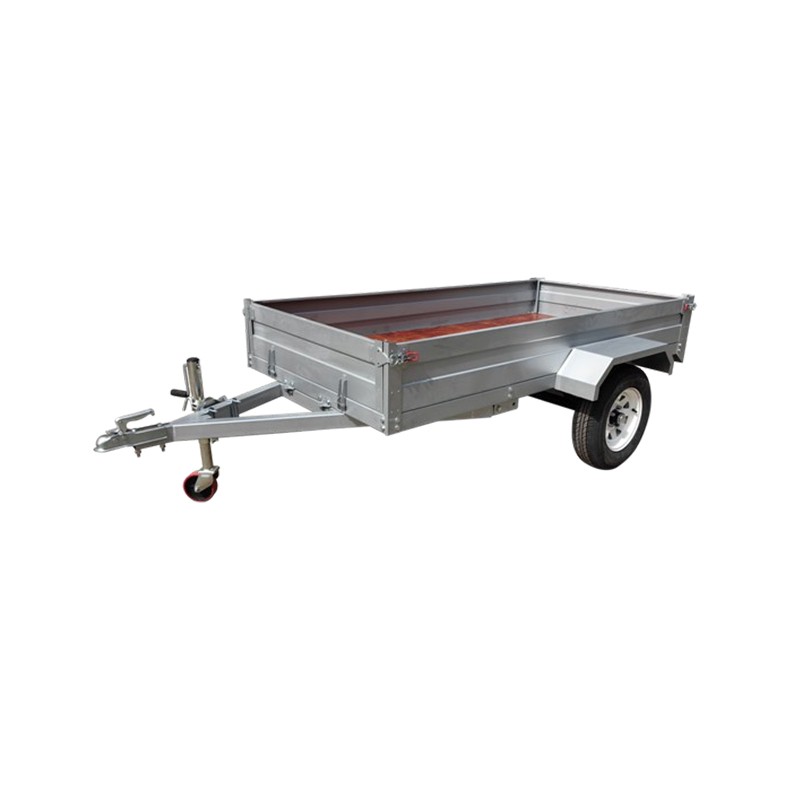
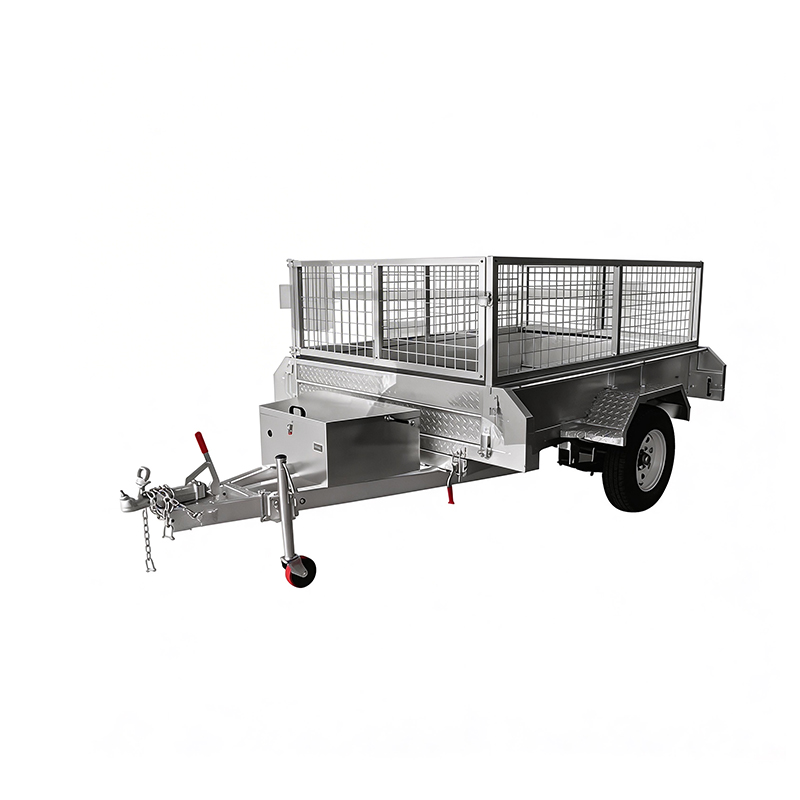
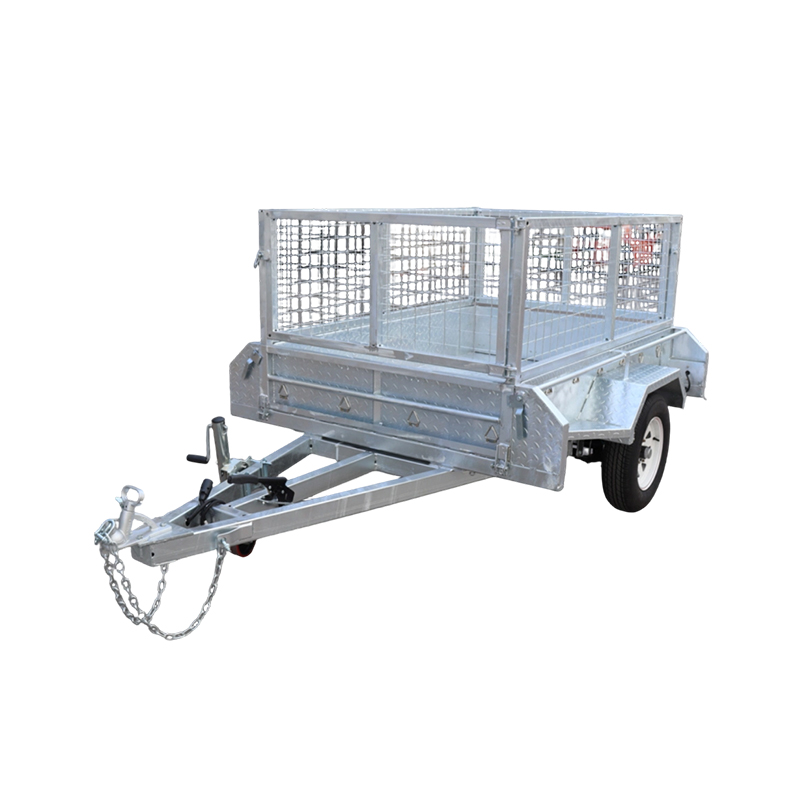
From Yard to Highway: Spec'ing the Right Trailer for Commercial Grunt Work
A trailer is only as good as the sum of its connections—both mechanical and structural. For fleet managers and independent operators running box and cage trailers in construction, agriculture, or waste hauling, the difference between a profitable asset and a money pit comes down to three factors: how you attach it, how you care for it, and what it's made of. Here's what actually matters in the field.
What type of trailer hitch do I need for a rear trailer?
Forget the vehicle salesman's pitch. The only number that dictates your hitch choice is the trailer's GVWR—that metal plate near the tongue. Your hitch must exceed that figure, not just match it.
Hitch Class Breakdown
| Hitch Class |
Receiver Size |
Max Gross Trailer Weight |
Max Tongue Weight |
Best For |
| Class I |
1-1/4" |
2,000 lbs |
200 lbs |
Small utility boxes |
| Class II |
1-1/4" |
3,500 lbs |
350 lbs |
Light cargo hauling |
| Class III |
2" |
8,000 lbs |
800 lbs |
Single-axle cage trailers |
| Class IV |
2" |
10,000 lbs |
1,000 lbs |
Tandem-axle heavy-duty |
| Class V |
2" / 2.5" |
20,000 lbs |
2,700 lbs |
Commercial equipment |
Key Selection Rules
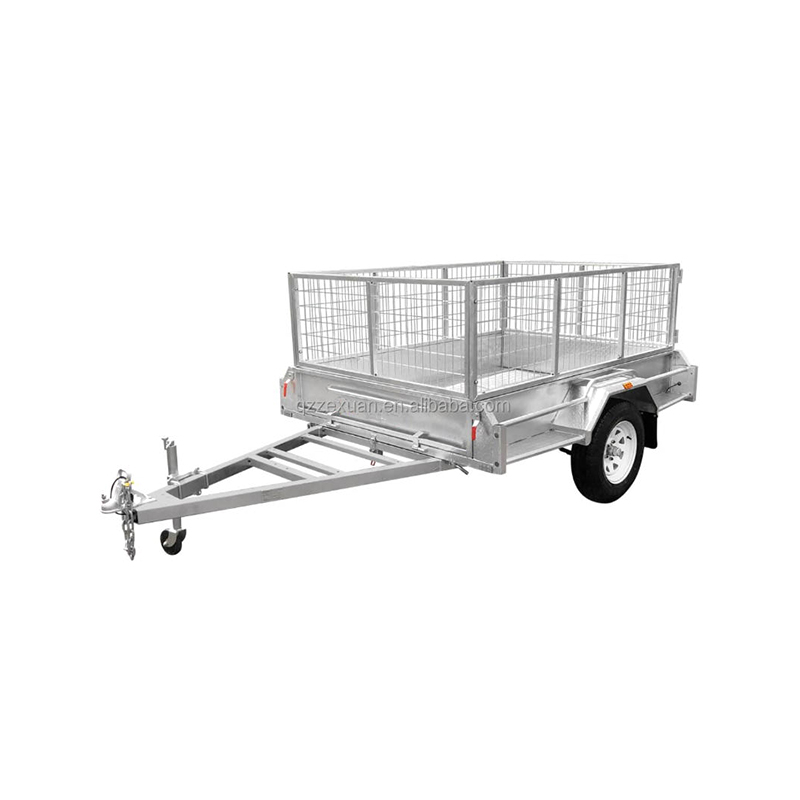
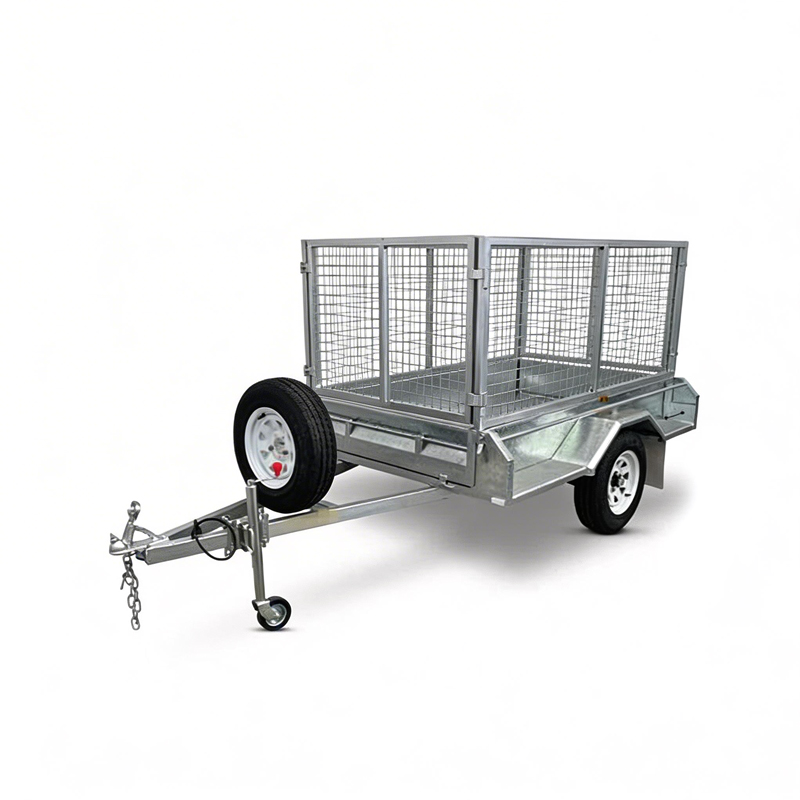
Single-axle box/cage trailers (1,650–3,300 lbs. GVWR): Class III meets nearly all needs
Tandem-axle, heavy-duty models (4,400 lbs and up): Step to Class IV or V
Tongue weight should be 10-15% of total loaded weight; too little and it will sway, too much and the rear suspension will bottom out
Weight-distribution hitches become necessary beyond 5,000 lbs to shift load across both axles and eliminate tail-dragging
Always verify your vehicle's factory towing capacity—not just the receiver rating. The weakest link determines your safe limit.
Maintenance That Keeps Cage Trailers on the Road
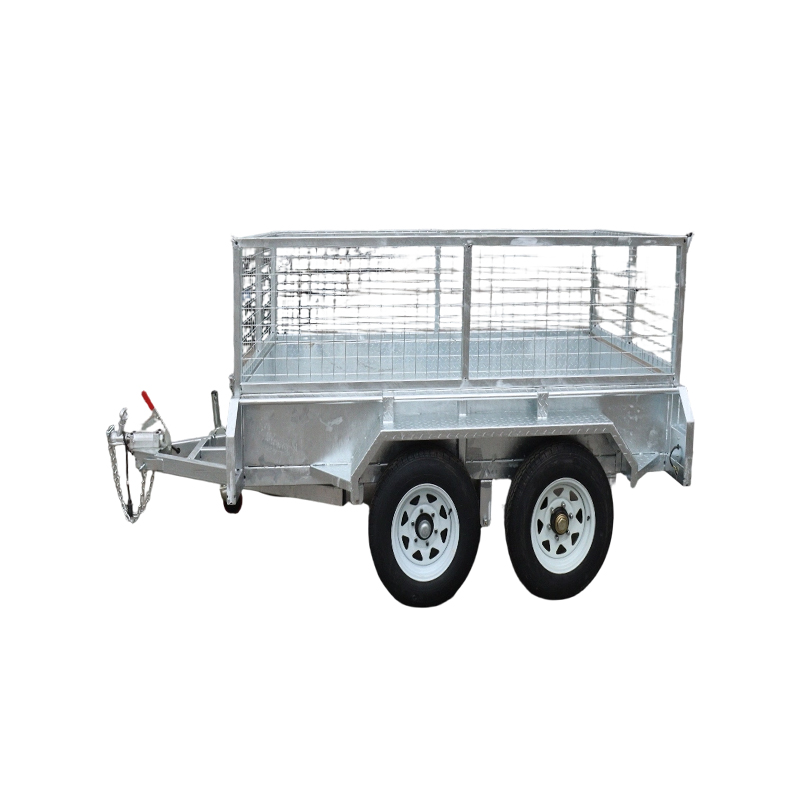
Cage trailers have a weakness. That is vibration. The mesh cage that is bolted on can come loose over time. The places where it is attached can start to rust. Smart owners make it a habit to check their cage trailers before every trip, not at certain times of the year.
Daily Pre-Trip Checklist
- Pull the latch on the coupler hard. If it makes a rattling sound, that means the spring is worn out and needs to be replaced.
- Hook up the lights. Walk around the cage trailer to make sure everything is working. If any of the markers are not working you can get pulled over by the police.
- Kick the tires to check the air pressure. If the tires are low the sides can blow out when you are driving on the highway.
- Check the lug nuts after you have driven 50 miles with the tires. Make sure they are tight.
Monthly Non-Negotiables
- Use a grease gun to grease all the moving parts on the suspension and springs. Do not use a spray.
- Pull out the pin that breaks away and listen to see if the brakes are working. If you do not hear a clicking sound, it means the brakes are not working properly in an emergency.
- Wash the bottom of the cage trailer after you have driven in areas or in the winter when the roads are salty.
Annual Tear-Down Service
- Check the wheel bearings by pulling off the hubs and washing out the grease with mineral spirits. Look for any signs of heat damage. Pack the bearings with new grease that can handle high temperatures. Replace the seals if they are damaged.
- Check the cage to make sure it is attached properly. Shine a flashlight along the bolts that hold the cage on and look for any dust. This means the coating on the bolts is worn off.
- Check all the welds on the suspension and springs to make sure they are not cracked.
Most of the time, cage trailers break down because the bearings are not taken care of not because of problems, with the structure. So it is a good idea to check the bearings every year. This is the way to make sure your cage trailer keeps running and does not break down. Cage trailers need this kind of maintenance to stay on the road.
Understanding GVWR and True Payload Capacity
GVWR is the ceiling—empty weight plus payload. Exceed it and you're overworking axles, springs, and tires in ways that cause cascading failures. It's not a suggestion; it's a legal limit.
Heavy-duty box cage trailers break down by axle
| Axle Setup |
Typical GVWR Range |
Common Use Case |
| Single axle |
1,650 – 3,300 lbs |
Landscaping, light debris hauling |
| Tandem axle |
4,400 – 7,700+ lbs |
Concrete forms, demo debris, livestock |
The Cage Factor That Catches Owners
The cage itself adds significant tare weight. A 36-inch cage might leave you 2,000 lbs of usable payload; a 48-inch cage on the same chassis could cut that to 1,600 lbs. Always calculate:
Usable Payload = GVWR – Tare Weight (use manufacturer's stamped numbers, not guesses)
Legal Considerations
- Most jurisdictions require braked axles on trailers exceeding 1,650 lbs gross
- Braked axles affect both purchase cost and annual inspection outcomes
- Check your state's specific thresholds—they vary
Paint flakes. Powder coat chips. Hot-dip galvanizing bonds with steel at a molecular level, creating a zinc-iron alloy layer that protects sacrificially. When a rock scratches through, surrounding zinc oxidizes first, sparing the steel underneath.
Expected Service Life by Environment
| Operating Environment |
Expected Protection |
| Dry inland routes |
80+ years (outlives mechanical components) |
| Temperate marine (Pacific Northwest, Northeast coasts) |
70+ years |
| Tropical marine (Gulf Coast, Florida) |
70+ years |
The "Mil-Per-Decade" Rule
- Each mil (0.001 inch) of zinc coating buys roughly 10 years of rust-free service
- Standard HDG runs 3.9 to 5 mils thick
- That translates to three to five decades before red rust appears
Why HDG Outperforms Paint Systems
| Factor |
Paint |
Hot-Dip Galvanizing |
| Internal cavity coverage |
None—moisture gets trapped inside |
Full coverage—coats hollow sections completely |
| Scratch protection |
Exposes bare steel to corrosion |
Zinc oxidizes sacrificially around damage |
| Recoating frequency |
Multiple times over trailer life |
None required for decades |
| Failure mode |
Rusts from inside out |
Even wear, predictable lifespan |
The Duplex Advantage
For operators running saltwater routes or winter road chemicals, a duplex system—galvanizing followed by a durable topcoat—doubles the effective lifespan of the steel. This matters most at high-wear points like hinge brackets and ramp edges, where mechanical abrasion is constant.

 +86 15157058370
 Language
  English
 Español
 عربى
عربى