Solar Surveillance Trailers: Mobile Security Without the Guard or the Grid
Security has a location problem. Fixed cameras only cover what's in their line of sight, and hiring guards for remote sites gets expensive fast—especially when you're paying someone to sit in a dark parking lot or an empty construction yard. Solar surveillance trailers solve both issues by bringing self-contained monitoring to places without power poles or patrol routes.
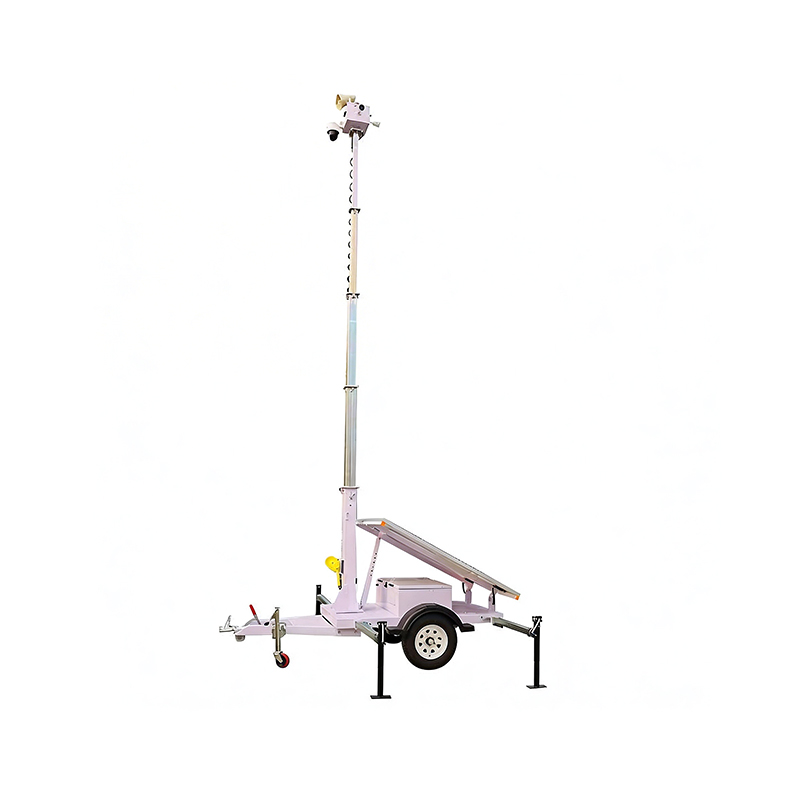
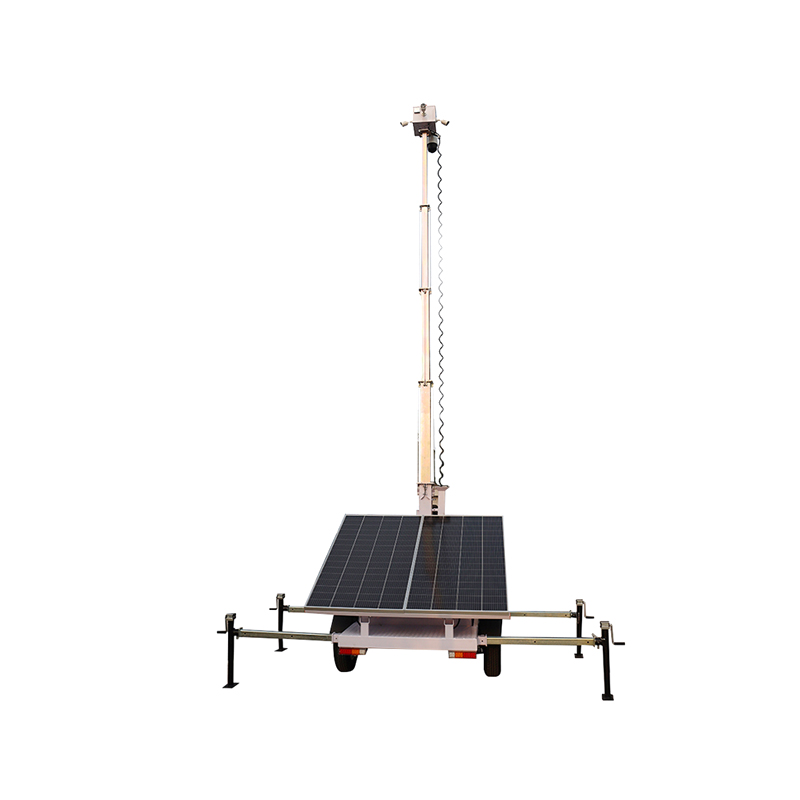
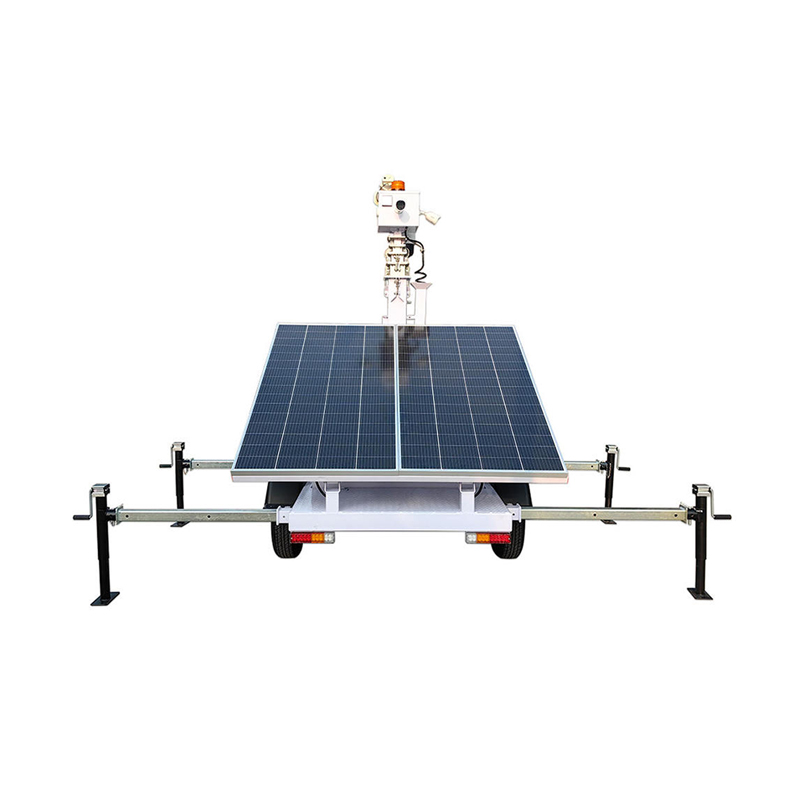
A solar monitoring trailer is a portable security unit that runs entirely on solar power. You tow it to a site, raise the mast, and it starts recording—no trenching for cables, no generator fuel, no permanent installation.
| Component |
What It Does |
| Solar panels |
Harvest sunlight to charge onboard batteries |
| Battery bank |
Store power for nighttime and cloudy stretches |
| Telescopic mast |
Raises cameras 20 to 26 feet for wide coverage |
| PTZ cameras |
Pan, tilt, and zoom with infrared for night vision |
| 4G/5G cellular gateway |
Transmits video for remote viewing |
How It Runs
The panels charge batteries during daylight. The batteries power cameras and network gear around the clock. A charge controller manages the flow, and remote monitoring software lets you check power levels and camera feeds from your phone or laptop. Optional add-ons include sirens, strobe lights, speakers for live voice-down warnings, and license plate recognition.
Deployment: Most units set up in 20 to 60 minutes once on-site. You tow them in, position the mast, and turn the system on. Moving to a new location is just as straightforward.
"Better" depends on the job. A trailer won't stop a physical altercation or manage crowd flow. But for theft deterrence and perimeter monitoring, it often outperforms a guard in ways that surprise people.
| Factor |
Solar Surveillance Trailer |
Live Security Guard |
| Coverage |
24/7 operation, never blinks |
Limited by shifts, working hours, and fatigue |
| Night vision |
Provides clear visibility in complete darkness |
Requires flashlights and may have blind spots |
| Evidence capture |
Records all activities and stores video footage |
Relies on personal memory and written reports |
| Cost |
One-time purchase or rental cost |
Requires hourly wages, benefits, and replacement costs |
| Physical intervention |
Cannot physically stop or confront an intruder |
Can directly engage and respond to threats |
Where Trailers Shine
- Always awake: Trailers don't call in sick, fall asleep, or take breaks. They also don't turn a blind eye to coworkers or regulars.
- Evidence on demand: When police or insurers ask what happened, you provide timestamped video—not a guard's recollection.
Where Guards Still Make Sense
- Live events: Crowd management and human presence matter at festivals or busy retail stores.
- Physical access control: Checking IDs, opening gates, and escorting people on-site.
- Dynamic situations: Security guards use judgment that AI can't replicate for unpredictable incidents.
Many operations combine both: a trailer for perimeter monitoring, one guard for access control. You cover more ground for less than the cost of a full guard rotation.
The answer is not the sun. These trailers use a mix of power sources, including power, battery storage and sometimes a backup system.
Solar Panels
Most trailers have three to six panels that produce between 880 and 1600 watts of power. The solar panels are usually made of silicon because they work better in low light than the older polycrystalline type.
Battery Banks
There are two types of batteries used in these trailers.
| Battery Type |
Pros |
Cons |
| AGM |
Lower upfront cost, proven reliability |
Heavier, shorter cycle life |
| Lithium LiFePO4 |
Lighter, longer lifespan, deeper discharge |
Higher initial investment |
Solar-Powered Mobile Security Trailers use batteries with capacities ranging from 800Ah to 13.2 kWh. A 13.2 kWh system can power cameras for days without sunshine.
Backup Generators
Some Solar-Powered Mobile Security Trailers have a generator that turns on when the battery power gets too low. This makes the system more reliable when it is cloudy or shady. However, it also means you have to pay for fuel and maintain the generator. This is a trade-off compared with using solar power.
Charge Controllers and Power Management
The charge controllers prevent the batteries from receiving too much power and turn off the power when it gets too low. The best systems have a dashboard that shows you how much power is being used how power the solar panels are producing and the status of the batteries. You can see this information from anywhere. If a solar panel is shaded or the batteries are not working well you will know before the system stops working.
Deployment Tip for Power
When you set up Solar-Powered Mobile Security Trailers you should point the panels south if you are in the Northern Hemisphere so they get the most sunlight. You should also try to avoid shading from buildings, trees or equipment that moves during the day. If the solar panels are shaded sometimes it will reduce the power they produce more than you think.

 +86 15157058370
 Language
  English
 Español
 عربى
عربى