Job Site Illumination: Are Solar Light Towers Worth the Switch from Diesel?
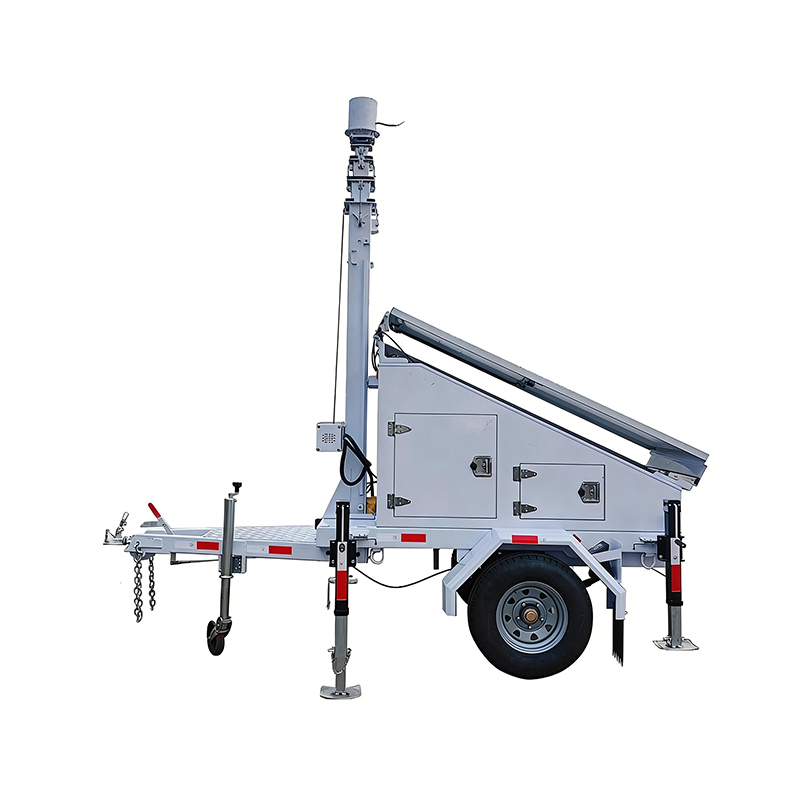
Walk onto any construction site after dark, and you will see the glow of light towers. The question is no longer just about brightness but about the power source behind it. With fuel costs volatile and emissions regulations tightening, solar light tower trailers have moved from a niche green option to a legitimate competitor against diesel. Here is a breakdown of whether they pencil out, what they actually do, and how bright they get.
The short answer is yes over the long haul, but the upfront cost tells a different story. Solar units typically carry a 10–15% higher price tag than diesel models at purchase. However, the operational math flips quickly once you start using them.
The primary savings come from eliminating fuel consumption. A solar trailer pulls energy from the sun and stores it in batteries, running LED lights for 12 to 16 hours on a full charge without burning a drop of diesel. This cuts operational expenses by an estimated 60%. For large projects, downtime due to refueling or generator maintenance can cost hundreds of dollars per hour, savings that add up fast.
Break-even and life-cycle comparisons:
- Return on investment: Many operators see the initial cost offset within 12 to 18 months.
- 10-year cost: Research shows solar trailers have a life-cycle cost roughly 88% to 93% of a diesel equivalent over a decade.
- Fuel savings: For fire camp operations, solar and hybrid units have achieved up to 100% fuel reduction, cutting fuel costs by thousands per year.
There are trade-offs beyond purchase price. The solar panels increase the trailer's footprint and can be more susceptible to physical damage on chaotic job sites. On the other hand, maintenance requirements are substantially lower, and you avoid the cost and logistics of fuel deliveries.
While lighting is the most common application, calling these units "light towers" undersells their capability. A portable solar trailer is essentially a mobile microgrid. It combines solar panels, battery storage, and sometimes an inverter to provide silent, emission-free power wherever it is needed.
| Application Area |
Specific Use Cases |
| Construction & Infrastructure |
Job site illumination, powering tools, and providing security lighting for overnight protection. |
| Surveillance & Security |
Running PTZ and bullet cameras at remote sites or temporary events, often with a mast for elevated visibility. |
| Emergency & Fire Response |
Lighting for fire camps, providing power for communications equipment, and reducing refueling traffic in safety zones. |
| Remote Agriculture & Utilities |
Powering water pumps for livestock, remote data collection, and monitoring of substations. |
| General Off-Grid Power |
Charging small devices, laptops, or functioning as a temporary power source for homes during outages. |
Their silent operation is a major advantage for urban sites with noise restrictions and overnight camps where crew rest is critical. A single unit can provide autonomous power for days on end, making it a versatile tool beyond just area lighting.
Lumens are the measure of visible light output, and for heavy-duty applications, you need a lot of them. Unlike older metal halide bulbs, LED technology produces extremely high light output with much less power consumption.
Typical lumens for heavy-duty LED towers:
- Heavy-duty diesel/LED units: Top-tier models can produce approximately 192,000 lumens using four 350-watt LED lamps.
- Lighting coverage: These high-output units typically cover a working area of 65,000 square feet or more.
- Comparison to older technology: While LED solar towers produce excellent illumination, studies note that some diesel models with metal halide lights can still put out more total light, but their efficiency and maintenance costs are far worse.
It is important to note that light output is only one part of the equation. Color temperature, measured in Kelvin, affects visibility. Most heavy-duty LEDs operate at 5000K (daylight white), which reduces eye strain and improves detail recognition compared to older, yellower lights. The focus is shifting from raw lumens to usable lumens that provide clear, safe illumination exactly where needed.

 +86 15157058370
 Language
  English
 Español
 عربى
عربى