Deck Space, Stopping Power, and Steel: What to Know Before Buying a Trailer
Show up at a dealer without a plan and you'll drive off with something that sort of works—until you try to haul that skid steer or back that rig down a tight driveway. Three questions separate a smart buy from a costly mistake: what footprint actually fits your load, whether brakes are worth the extra wire, and what separates a beefy flatbed from one that just looks the part.
Start with what you move most often, not what you might move someday. A trailer that swallows a zero-turn mower will feel like overkill for bags of mulch.
| Category |
Typical Bed |
Weight Range |
Real-World Use |
| Small utility |
4x6 to 4x8 |
Up to 1,500 lbs |
Push mowers, furniture, yard waste |
| Mid-size |
5x8 to 5x10 |
1,500 – 2,500 lbs |
ATVs, riding mowers, drywall |
| Large utility |
6x10 to 6x12 |
2,500 – 3,500 lbs |
Zero-turns, fence posts, gravel |
| Tandem-axle |
6x12 to 7x16 |
3,500 – 7,000 lbs |
Compact tractors, demo debris |
Flooring makes a bigger difference than most people think:
- Expanded metal lets rain and mud fall through but won't hold a heavy jack or steel beam without denting.
- Plywood takes point loads better and keeps road spray off cargo, but rots if you skip sealing the edges.
Gates and sides:
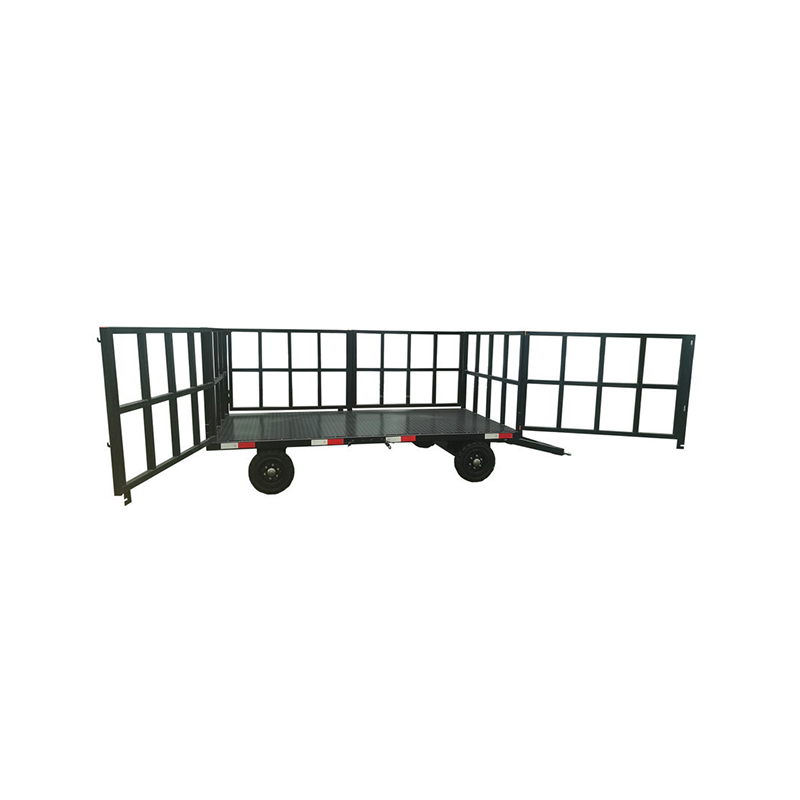
A rear ramp is non-negotiable for wheeled equipment—but check its rating separately. Split gates work better for long pipe or lumber. Removable stake sides give flexibility for loose loads while still running it flat for machinery.
One detail that gets overlooked: tongue length. A short tongue fits in a garage but makes backing a pain and raises jackknife risk. Lean toward longer tongues—they track straighter.
Whether brakes are mandatory depends on where you register—and where you drive. Crossing state lines changes the math.
| Brake Requirement Threshold (GVWR) |
States Where This Rule Applies |
| 1,500 lbs GVWR |
NY, CT, VT |
| 2,000 lbs GVWR |
CA, CO, OR |
| 3,000 lbs GVWR |
TX, FL, IL, PA, OH, and most other states |
| 3,500 lbs GVWR |
IA, ND |
Two brake systems dominate:
- Electric brakes need a cab controller and include a breakaway kit—a small battery that locks wheels if the trailer detaches.
- Surge brakes are hydraulic and self-contained. No controller needed—rental yards love them.
The breakaway battery is a consumable. Plan to swap it yearly.
Do you actually need brakes on a 1,500-lb empty trailer?
Add 1,000 lbs of pavers and you're at 2,500 total. In a 3,000-lb state, brakes are optional. But hook that behind a midsize SUV on a damp road and you'll feel the push. Many operators spec brakes on anything over 1,500 regardless of the law, just for the extra cushion.
Crossing into California? The 2,000-lb rule applies. The strictest threshold along your route is what counts.
Flatbed Shopping: What Actually Handles Heavy Work
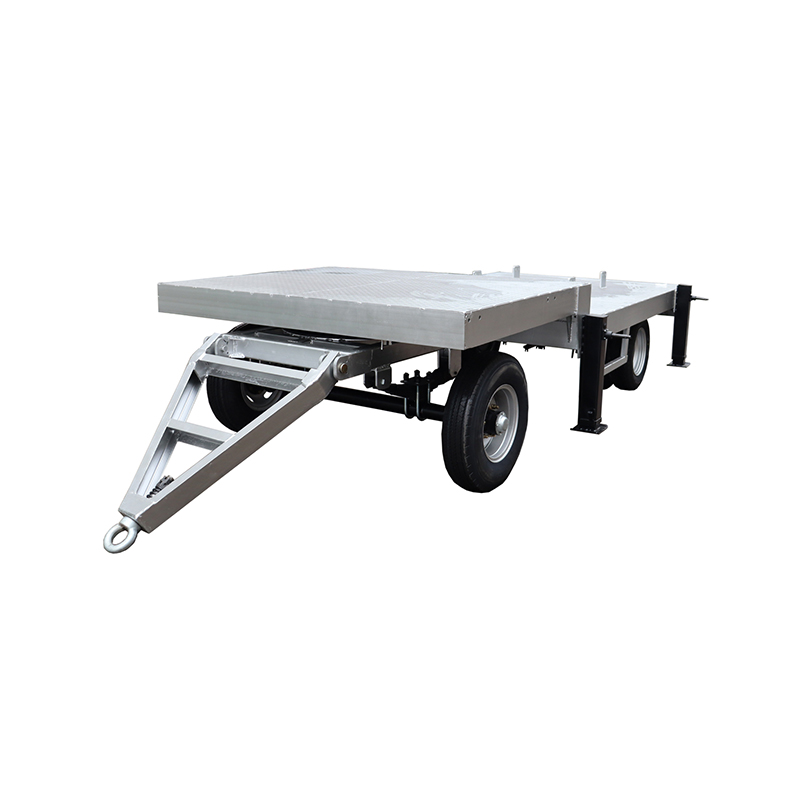
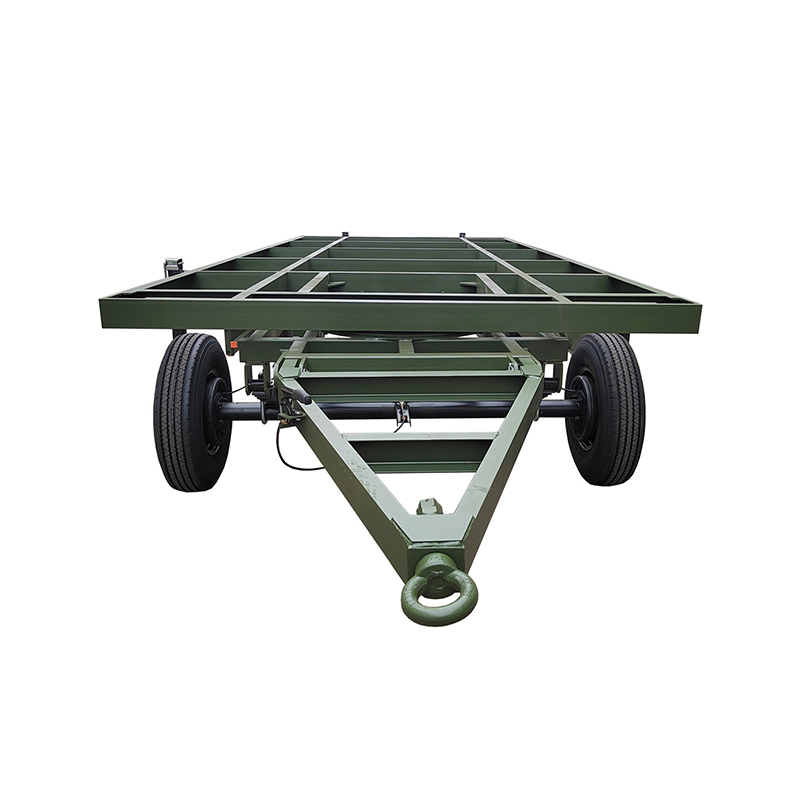
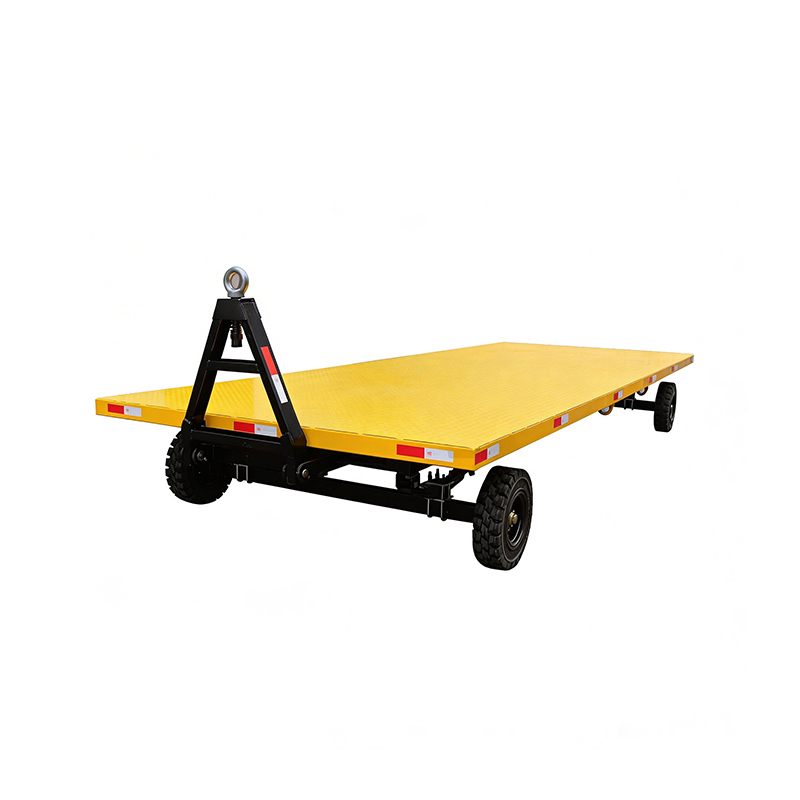
"Commercial grade" gets slapped on a lot of trailers that don't earn it. A real heavy flatbed trailer shows its quality in the frame, crossmembers, and axles.
| Component |
What Holds Up |
| Main rails |
I-beams or C-channel—skip angle iron |
| Crossmembers |
16–24 inches apart keeps deck from bowing |
| Deck |
2-inch treated lumber or steel plate |
| Tongue |
3x5 tubing minimum on tandem rigs |
Axle ratings tell the real story:
- One 3,500-lb axle leaves ~3,000 lbs payload.
- Two 3,500-lb axles get you ~6,000–6,500 lbs.
- Two 5,200-lb axles push to ~9,000–10,000 lbs.
- Two 7,000-lb axles put you in commercial territory—12,000+ lbs.
Tire speed ratings catch people off guard. Most trailer tires are stamped for 65 or 75 mph max. Run faster and heat builds up, leading to tread separation regardless of load weight.
Ramp choices:
- Slide-in ramps store neatly but aren't for heavy machines.
- Fold-up ramps handle more but add rear-end heft.
- Either way, ramps should rate at least 20% above your heaviest equipment.
Tie-down points: Look for D-rings welded to the frame, not just bolted through wood. Four per side minimum.
One final reality check: The Gross Vehicle Weight Rating includes the weight of the trailer too. For example a big flatbed trailer that weighs 2,500 pounds when it is empty and has a weight limit of 10,000 pounds can only carry 7,500 pounds of stuff. Now, if you have an excavator that weighs 8,000 pounds before you even put fuel or buckets on it you are already, over the weight limit before you even secure it to the trailer.

 +86 15157058370
 Language
  English
 Español
 عربى
عربى