Solar Light Towers: What They Cover, How They Work and Are They Worth It
Rental yards are seeing more solar light towers go out the door than ever before. The pitch is simple: no fuel, no fumes, no engine maintenance. But once you get one on site, the real questions start. How many square feet will it actually light up? What happens on cloudy days? And can you drag it around a muddy job site without a semi truck?
Coverage Area—What to Expect in the Real World
Coverage numbers on spec sheets are like fuel economy estimates. They assume perfect conditions. Your actual illuminated area depends on mast height, fixture aim, and how bright you need the edges to be.
| Fixture Wattage |
Typical Height |
Realistic Coverage |
Use Case |
| 4 × 120W |
10 ft. |
~32,000 sq. ft. |
Parking lots, large staging areas |
| 4 × 160–200W |
23–24 ft. |
21,000–40,000 sq. ft. |
Roadwork, construction perimeters |
| 4 × 350W |
21 ft. |
~8,200 sq. ft. |
Compact job sites, focused task lighting |
A few practical realities:
- Taller masts spread light wider but dimmer at the edges. That 40,000 sq. ft. claim might work for general site awareness, but finish work needs tighter focus.
- Lumens tell you more than watts. Newer LEDs can hit 150 lumens per watt, meaning less draw for the same brightness.
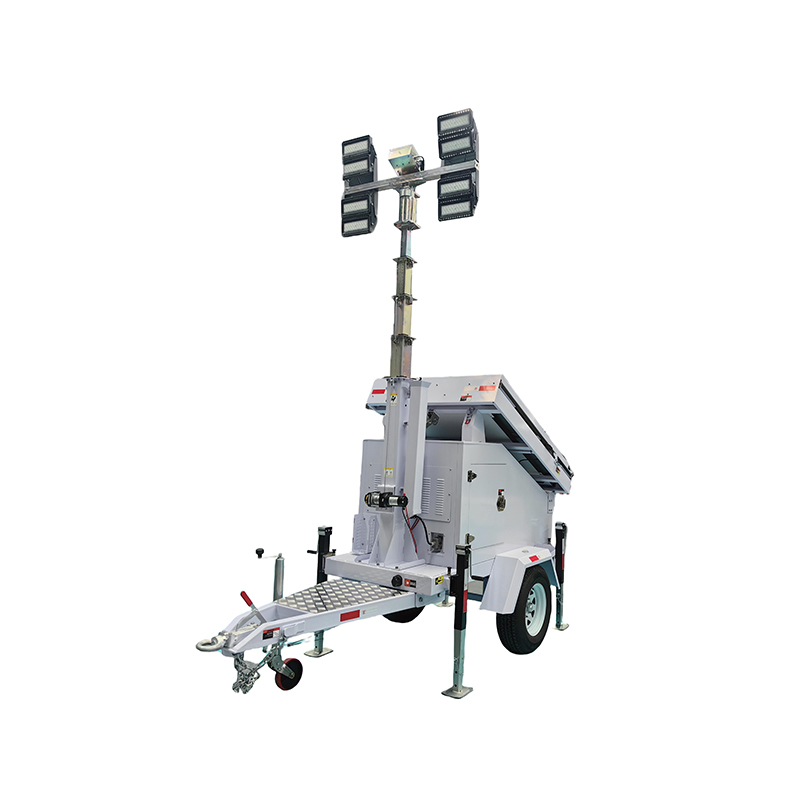
- Individual fixture aiming lets you concentrate light on work zones and leave empty areas dark, which extends battery runtime.
For most roadwork and construction, 90,000+ lumens covers a solid work area. For site security or parking lots, you can get away with less.
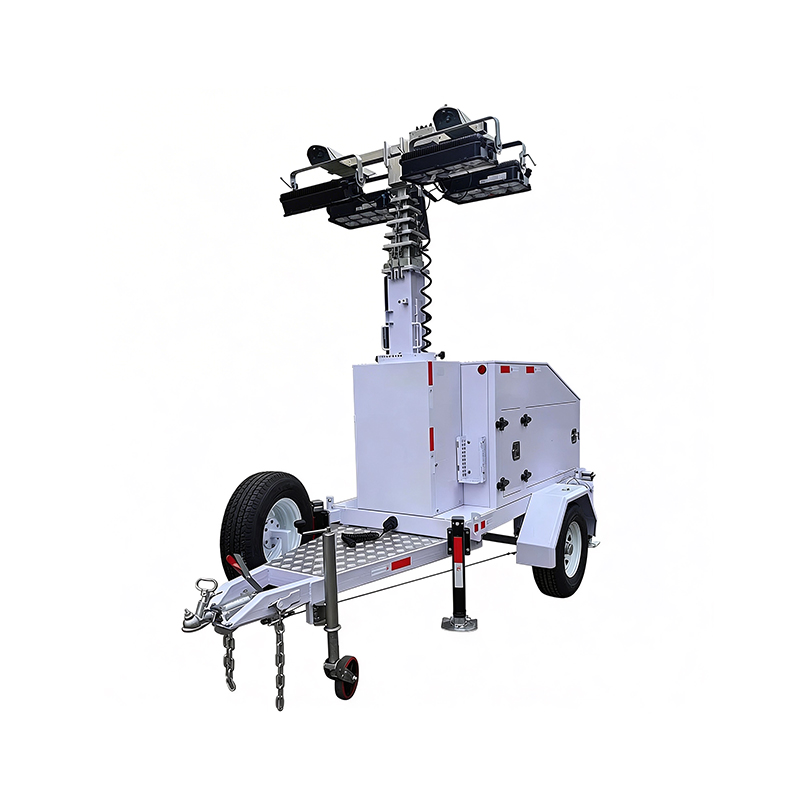
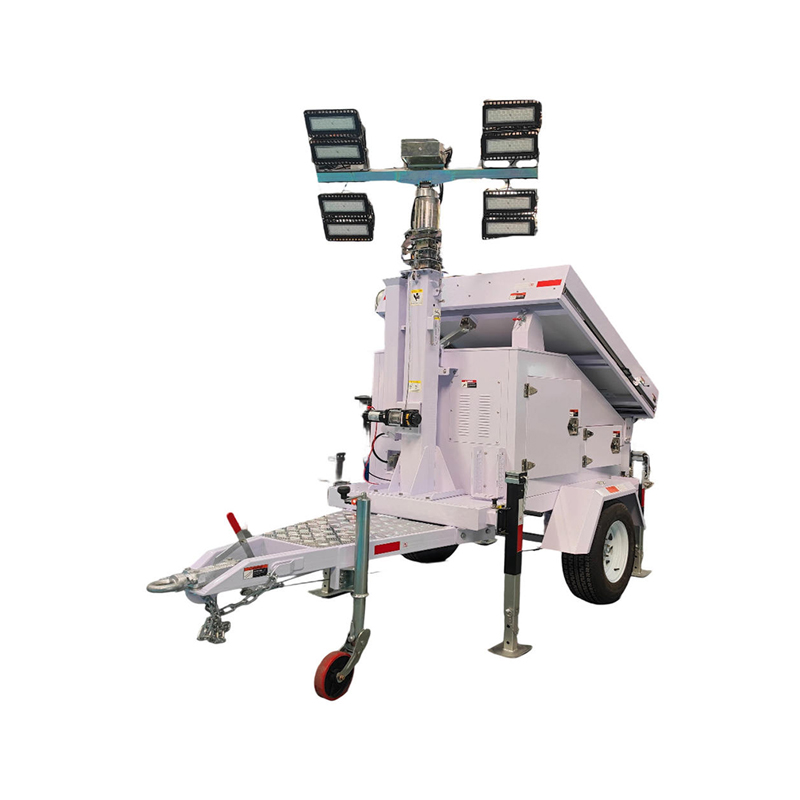
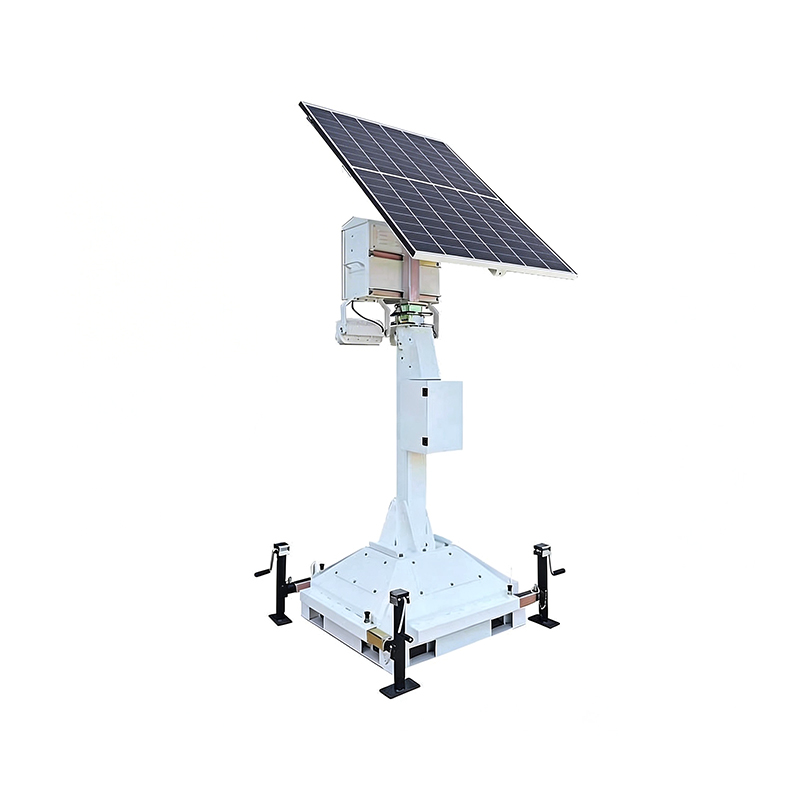
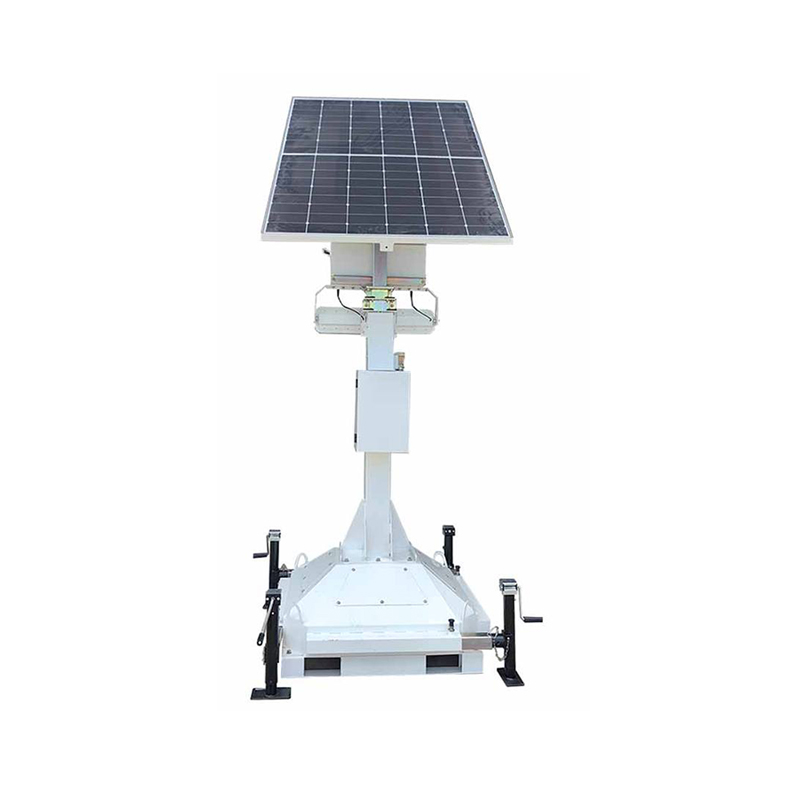
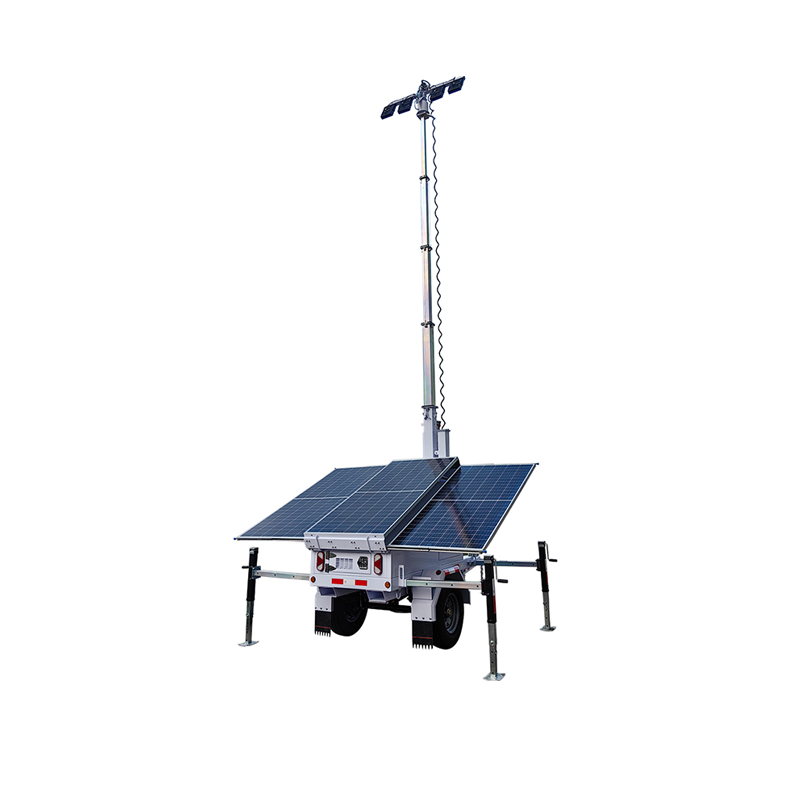
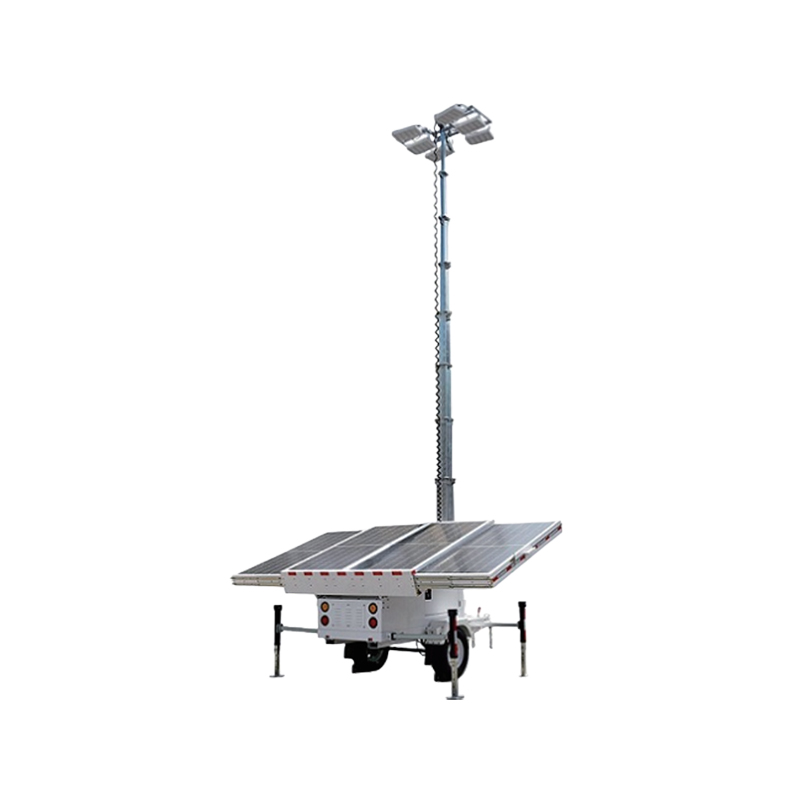
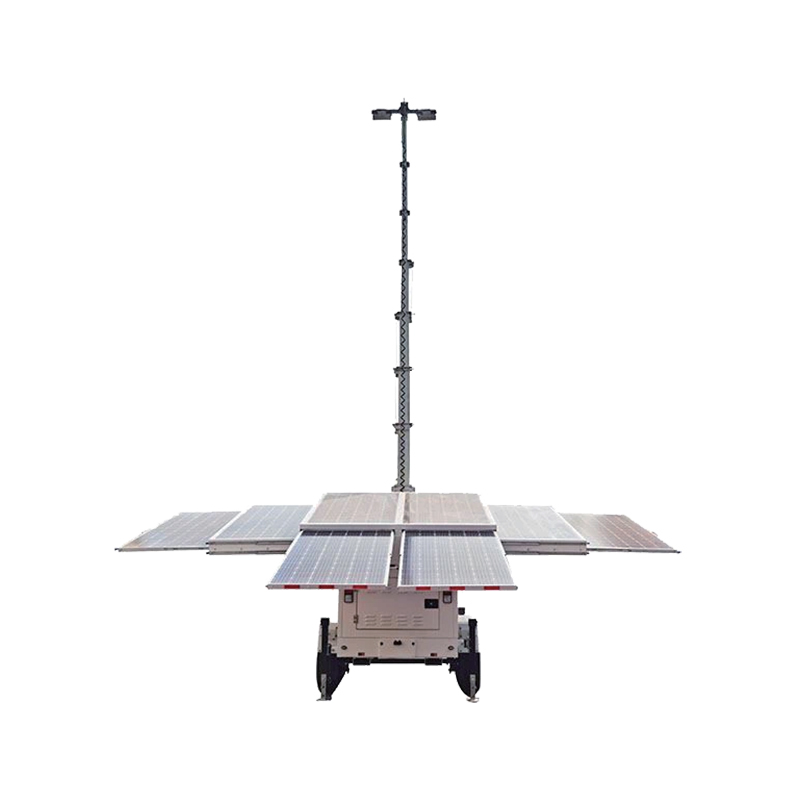
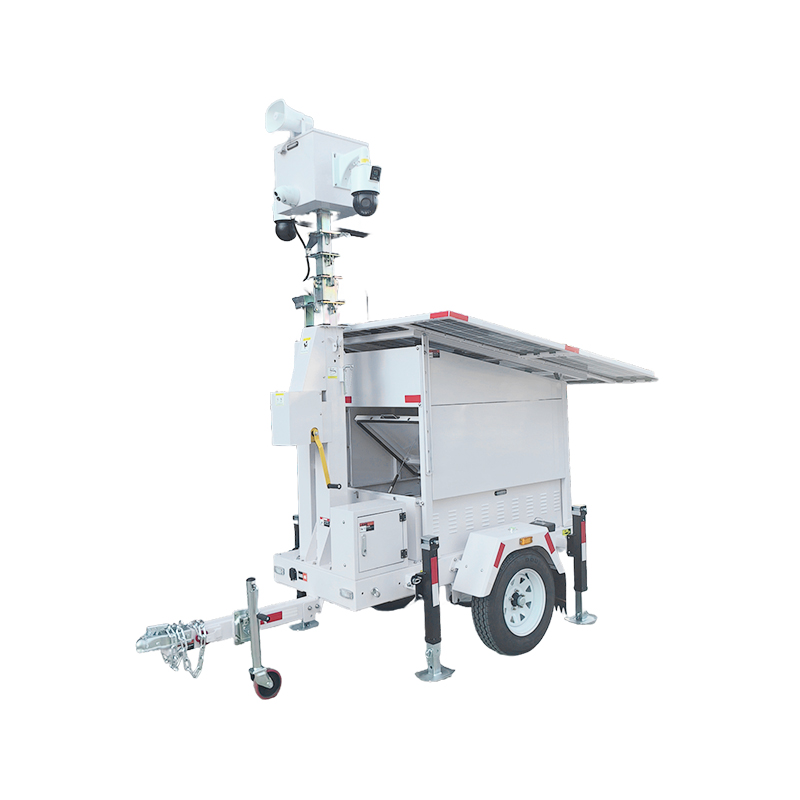
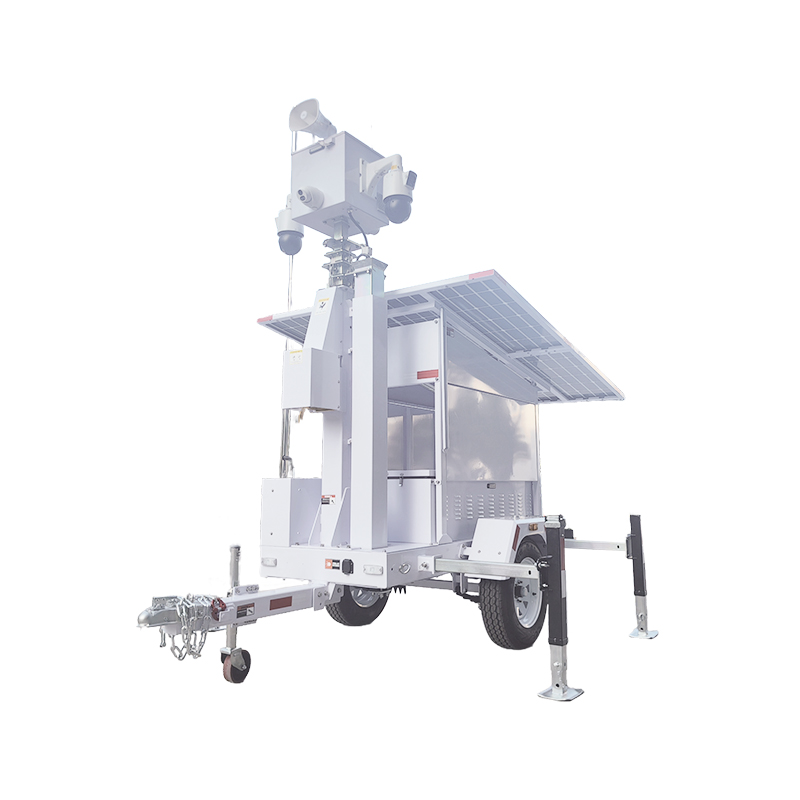
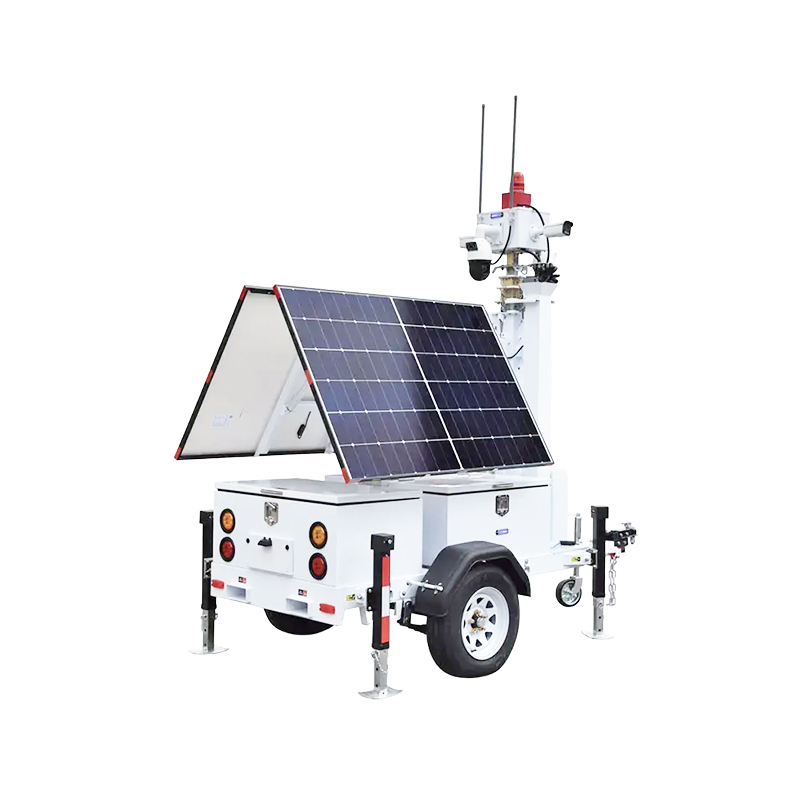
Three separate systems share one trailer frame: the solar array, the battery bank, and the light mast.
The daily cycle:
- Sunlight hits the panels. Monocrystalline is standard now—better in low-light conditions than older poly types.
- A charge controller manages flow. MPPT controllers squeeze more usable power from panels than cheaper PWM units, especially on overcast days.
- Batteries store the juice. Gel and lithium iron phosphate (LiFePO4) are common. Lithium costs more but lasts longer and runs deeper cycles. Compact units pack ~3.6 kWh; larger rigs store 24 kWh or more.
- Dusk arrives and lights kick on. Photocell sensors are standard. Programmable dimming lets you run full brightness early, then taper off through the night to save power.
Raising the mast is usually a one-person job—manual winch on budget units, electric or hydraulic on pricier models.
Cloudy days are the vulnerability. If batteries don't fully recharge, most units include an AC inlet for shore power backup. Some newer models allow generator input as a last resort.
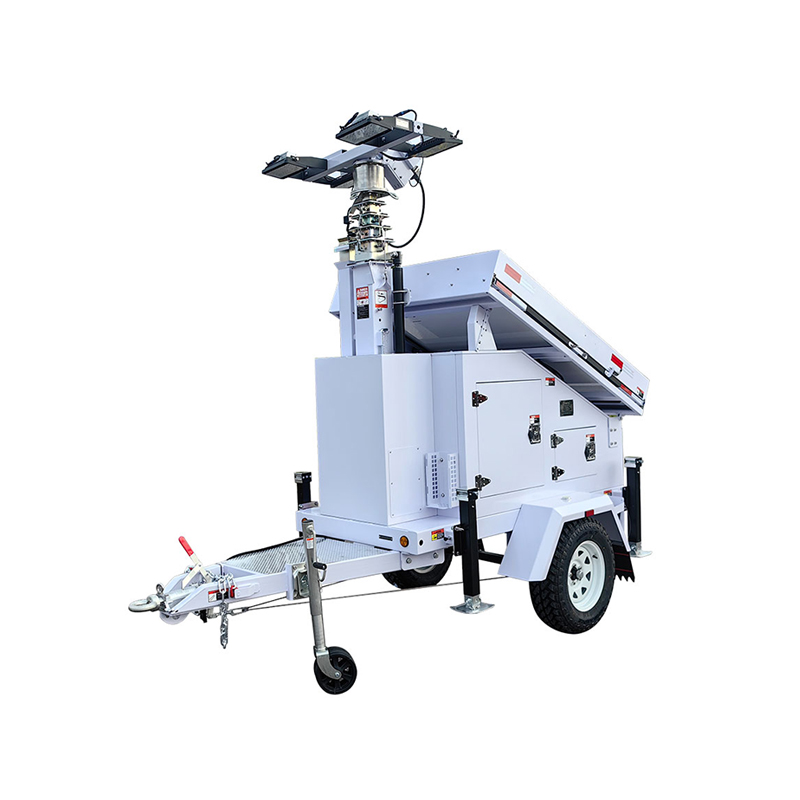
"Portability" does not mean the same thing to everybody. These are trailer-mounted devices, but the weight and size when folded determine how much you would want to move them in practice.
Weight and hitch compatibility:
- Single-axle compact units: 1,250–1,800 lbs. Use a 2-inch ball hitch. Midsize SUV or half-ton pickup handles it.
- Tandem-axle heavy units: 2,200–2,900 lbs. Often use a 3-inch ring or pintle hitch. Need a ¾-ton truck. Brakes usually required at this weight.
- Stowed height: 6–7.5 feet—fits through standard garage doors.
- Stowed length: 8–13 feet—affects how many fit on a flatbed for shipping.
On-site maneuverability:
- Once disconnected, you can push them around a flat yard by hand if ground is dry and level.
- Four outrigger legs are standard. Drop them and the unit stays stable even with mast fully raised.
- Forklift pockets on commercial models let you grab with a telehandler and reposition without hitching back up.
The practical limit is weight. That 2,900-lb tandem unit is a pain to move daily. If you're repositioning every shift, the lighter single-axle units under 1,500 lbs are much friendlier.
Your truck's payload matters more than its tow rating. That 2,900-lb tower plus 500 lbs of tongue weight takes a chunk out of what you can carry in the bed. If you're also hauling tools, you might exceed your rear axle rating before you hit your tow rating.

 +86 15157058370
 Language
  English
 Español
 عربى
عربى